
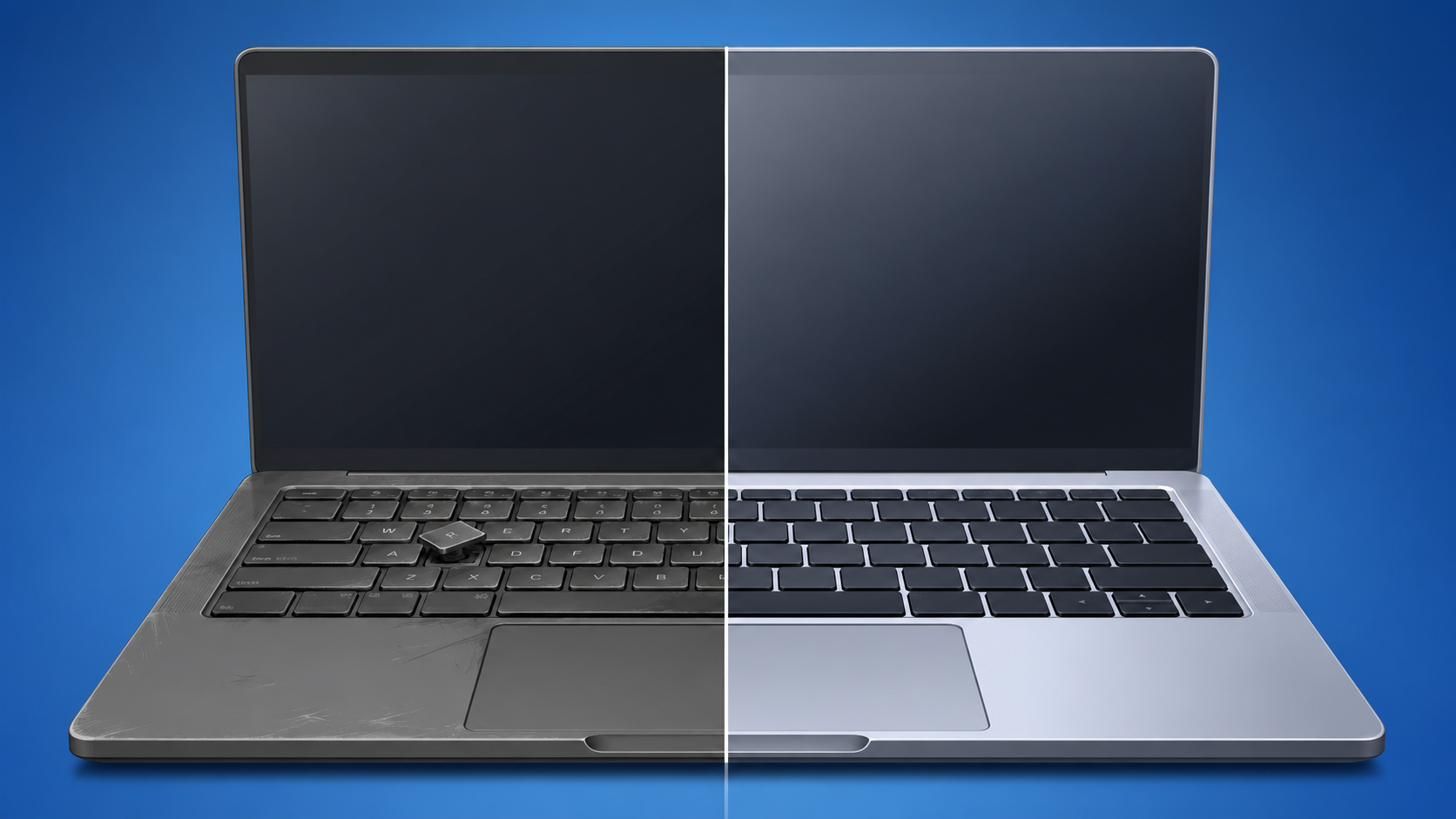
You're mid-sentence and the keyboard doubles a letter you only pressed once, or a key just stops registering entirely. It's infuriating, and the instinct is immediate: time for a new laptop. Before you start browsing, though, it's worth slowing down, because the answer here genuinely depends on a few things, and getting it wrong either way costs you.
Start with one simple test
If you have a spare USB keyboard, plug it into your laptop. If everything works perfectly with the external keyboard connected, you've just confirmed that the fault is isolated to the built-in keyboard and nothing else. The laptop itself is fine, and that single test changes the whole conversation, because you're no longer looking at a broken computer but one broken component.
If the USB keyboard doesn't help, or if you're seeing other problems alongside the keyboard issues (slowdowns, crashes, display glitches), then something deeper may be going on, and a proper diagnostic is the right next step.
What actually goes wrong with laptop keyboards
Most keyboard failures come down to a few common causes: debris compacted under the keys from years of crumbs and dust; worn contacts on individual keys after heavy use; a deteriorated membrane beneath the keys; or liquid damage at some point in the laptop's life.
The first three are usually straightforward repairs. Liquid damage is a different situation, because moisture can travel further than the keyboard itself, so it warrants a closer look before assuming it's a simple fix.
When repair makes sense
If the laptop is relatively recent, runs well, and the fault is genuinely limited to the keyboard, repair is almost always the better call. For most standard Windows laptops from brands such as HP, Dell, Lenovo, or ASUS, a keyboard replacement is typically a fraction of what a replacement laptop costs, and you keep all your files, settings, and software exactly as they are.
The repair becomes even easier to justify when you factor in what buying new actually involves: the purchase price, the time spent setting everything up, and migrating your data across to a machine that may not feel noticeably faster or better for everyday tasks.
When replacing the laptop makes more sense
Age is the main factor. If your laptop is five or more years old and already feeling sluggish, a keyboard repair might extend its life by another year or two at most. You'd be spending money on a machine that's likely to develop other issues before long and that may no longer handle current software comfortably.
The other factor is proportion. If the repair quote is coming in close to what a comparable replacement laptop would cost, the economics start to favor buying new, and it's worth having that conversation before committing either way.
MacBooks are a special case
Apple laptops are built differently. On most MacBook models, the keyboard is integrated into the top case rather than being a standalone unit, which makes replacement far more labor-intensive. Repair costs are higher as a result, so the calculation shifts compared to a standard Windows laptop. If you have a MacBook with keyboard issues, it's worth getting a specific quote before assuming either direction.
Let's figure it out together
A dead keyboard is not a dead laptop. Most people skip straight to shopping for a new machine when one component failed. That is an expensive reflex.
The real question is not "is the keyboard broken." It is "is anything else broken." A recent laptop that runs fine with one bad part is worth fixing. A five year old laptop that already crawls is not.
Old way: guess, panic, buy new.
New way: test, diagnose, decide with numbers in front of you.
Take five minutes right now. Plug in a spare USB keyboard and type a few sentences. If everything else feels normal, you have a single component problem and repair is likely the smarter move. If the machine still stutters, crashes, or fights you, the issue runs deeper and guessing gets expensive fast.
Either way, you should not be making a several hundred dollar decision on a hunch. Get the real numbers first.
👉 New to Borked PC? Start by filling out our quick Right Fit Questionnaire to see if Borked PC could be the right IT and Cybersecurity Partner for you.
📞 Or schedule a free 15-minute call at a time that works for you: Book a call
Prefer to talk now? Give us a call at (610) 599-6195.