
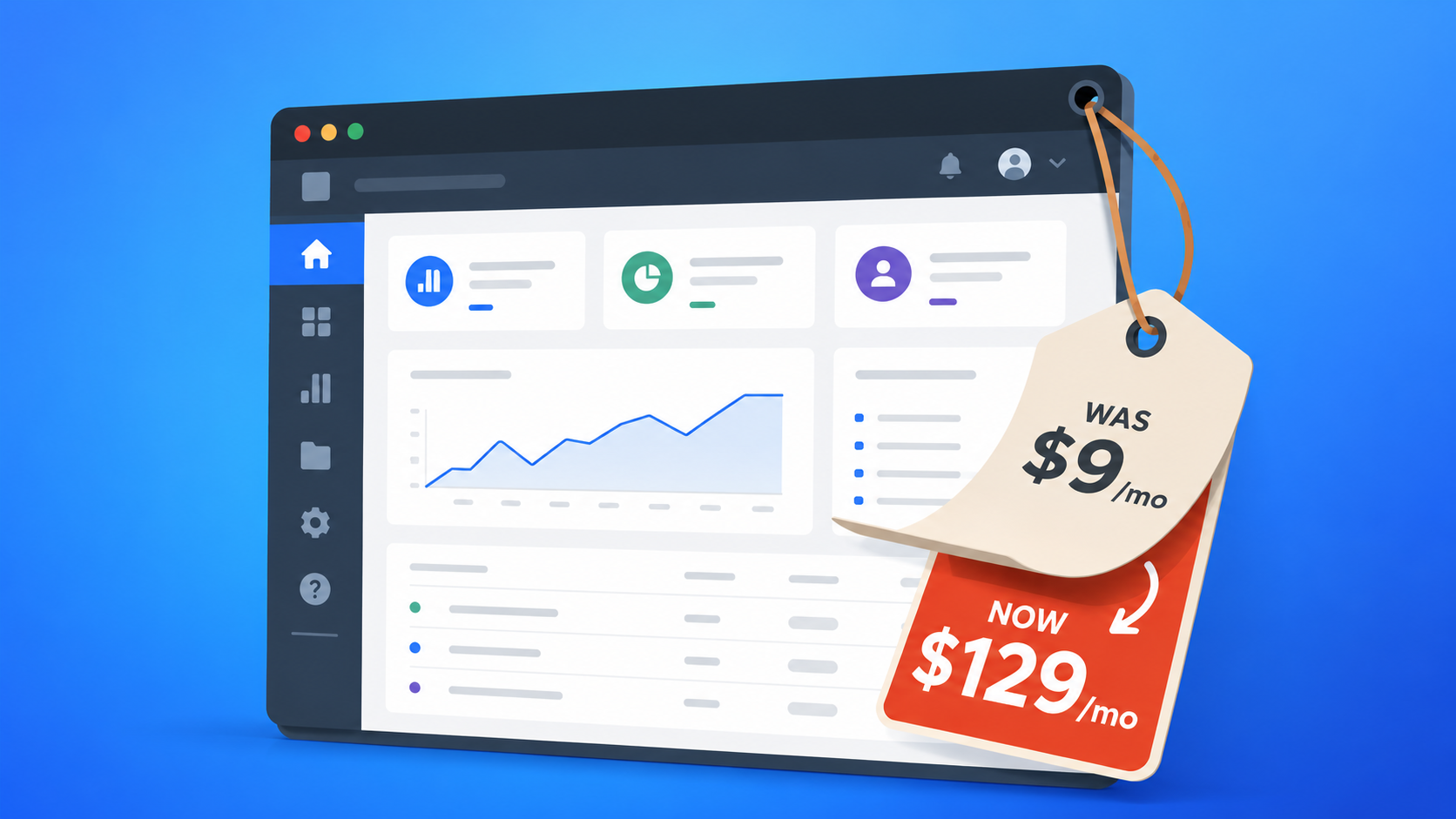
The renewal notice lands in the inbox looking like routine housekeeping, except the number at the bottom is not the one you are used to seeing. The accounting platform, the scheduling tool, or the program that has quietly run a piece of your business for years has changed the deal. Maybe the price has jumped well beyond inflation, the tier you have paid for since the beginning is being retired, or the one-time license you bought years ago now requires a subscription just to keep functioning. There was no negotiation and no warning beyond an email, and the deadline attached to it is shorter than feels reasonable.
The hard part is not the price
What follows is no small decision. Pay the new rate and absorb a cost that was never in the budget, push back and hope the vendor reconsiders, or leave for something else. Leaving sounds straightforward until you list everything that depends on the software actually working: years of historical data, integrations built around it, staff who know it by habit, and in some cases physical equipment downstream that the software exists to run in the first place.
When there is no alternative
For some businesses, the honest answer is that no replacement exists. Specialized equipment, such as manufacturing or medical hardware, is sometimes controlled by software written for an operating system the vendor stopped supporting years ago, Windows 7 being a common example. There is no current version to upgrade to and no competitor product built for that exact piece of equipment. In that situation, the real question is not which software to switch to but how to keep the existing setup running safely.
A rushed decision is the real risk
The risk here is rarely the new price itself but the speed at which the decision gets forced. A 30-day notice does not leave room to properly weigh alternatives, calculate what migrating away would actually cost in time and disruption, or test whether a legacy workaround is even viable for the equipment involved. Businesses end up paying the higher price out of inertia, or migrating in a hurry and losing data, history, or productivity along the way, not because either path was wrong but because neither was chosen with enough information behind it.
Let’s review this before the deadline does
A vendor changing the deal should trigger a proper review, not a scramble. That review means knowing what genuine alternatives exist, what walking away would actually cost against what staying costs, and whether the software in question can be replaced at all or preserved only through a workaround. None of that fits inside the window a renewal notice gives you, which is exactly why it should never start there.
The risk here is rarely the new price itself but the speed at which the decision gets forced. A 30-day notice does not leave room to properly weigh alternatives, calculate what migrating away would actually cost in time and disruption, or test whether a legacy workaround is even viable for the equipment involved. Businesses end up paying the higher price out of inertia, or migrating in a hurry and losing data, history, or productivity along the way, not because either path was wrong but because neither was chosen with enough information behind it.
Here is the truth. The renewal notice is not the start of the decision. It is the deadline for a decision you should have started weeks ago.
Most owners react to the date. Smart owners ignore it. The date is the vendor's leverage, not yours. The moment you treat 30 days as your only window, you have already lost.
Do this in the next five minutes. Open a folder and drop in every vendor renewal notice you can find. Write the renewal date next to each one. That single list turns surprise price hikes into planned reviews.
Then start the real review while you still have room to move. Compare genuine alternatives. Add up what leaving actually costs against what staying costs. If nothing else exists, find out whether the current setup can be kept running safely.
The worst deals get signed under pressure. Give yourself time, and the pressure disappears.
👉 New to Borked PC? Start by filling out our quick Right Fit Questionnaire to see if Borked PC could be the right IT and Cybersecurity Partner for you.
📞 Or schedule a free 15-minute call at a time that works for you: Book a call
Prefer to talk now? Give us a call at (610) 599-6195.