
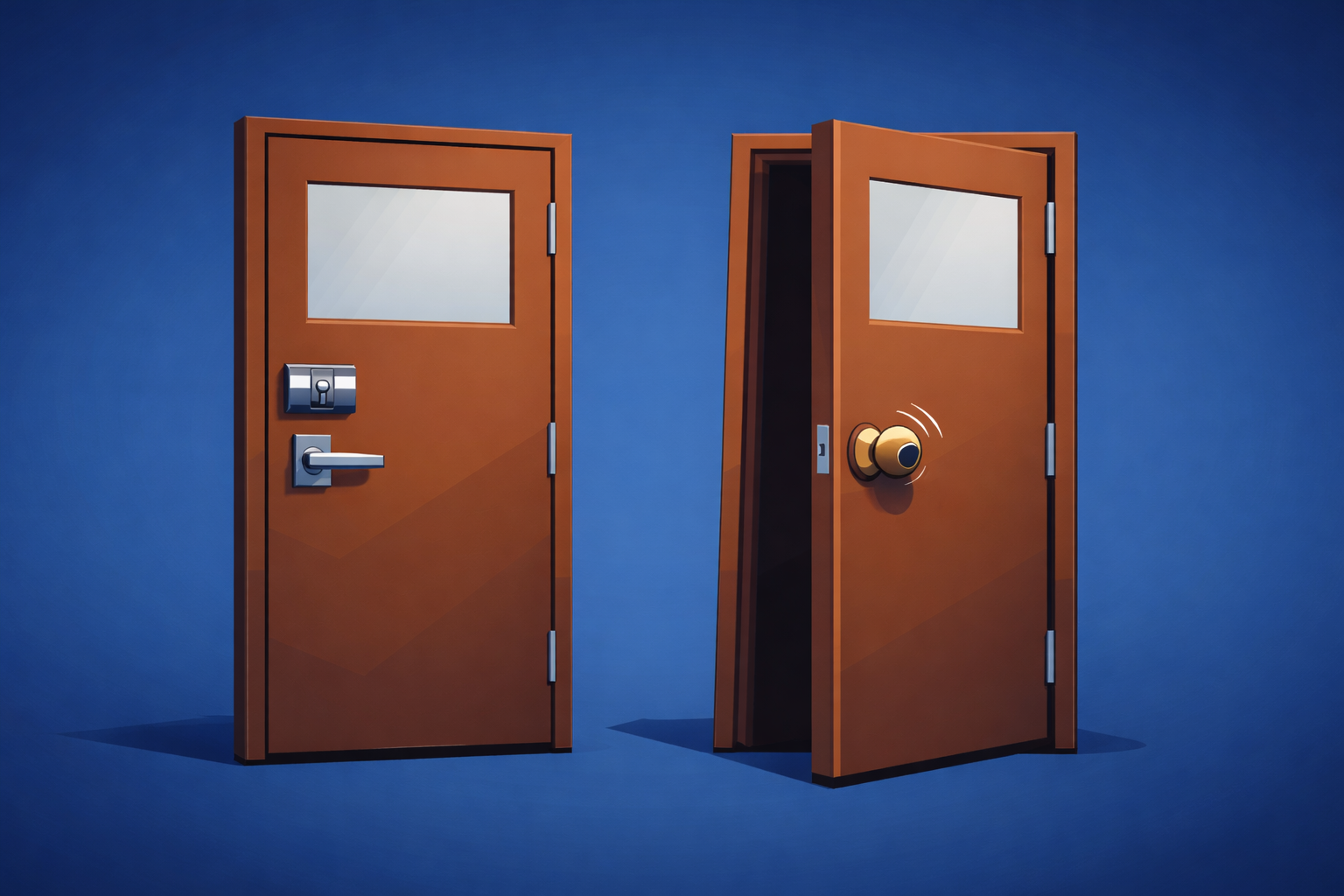
Most business owners think they want fewer IT problems, but what they usually want is to stop carrying the feeling that something might be wrong.
That feeling shows up not only when systems fail; it sits there quietly, even during good weeks. Everything appears to be working, staff are productive, and nothing is actively broken, yet there is still a sense that if something did go wrong, it would somehow find its way back to you.
That mental load becomes normal over time. You may not notice it day to day, but it shapes how you work and how much attention you pay to things that don't need it.
The Question Your Customers Are Asking
Most small business owners think they're too small to be targeted, but hackers no longer pick targets. They use automated tools that scan thousands of businesses per hour, looking for easy entry points.
Your competitor didn't think it would happen to them either. They had antivirus software (probably the free kind), passwords on their computers (probably "Summer2024!"), and a guy who "handles the tech stuff" when things break.
Sound familiar?
When your competitor got hit, your customers noticed. Whether they say it out loud or not, they're wondering, “Does my vendor have my data protected? What happens if they get hacked and lose my information? Should I be asking about their security before I give them more business?”
Some of your larger clients are already required by their insurance or contracts to verify that vendors have basic cybersecurity in place. That requirement is trickling down fast.
In 12 months, you might lose bids simply because you can't answer basic security questions.
Can You Answer These Questions?
If ransomware locked your systems tomorrow, could you be operational within 24 hours?
Do you actually test your backups, or just assume they're working?
If your IT person quit tomorrow, would someone else know all your passwords, licenses, and how everything connects?
Can you prove to a customer or insurer that you have protection in place?
Would you catch it if an employee accidentally gave their password to a fake login page?
If you hesitated on more than one, you're in the same position your competitor was in two weeks ago.
What A Breach Actually Costs
Here's what happens to a typical 10-person business:
Downtime costs $3000 to $10,000 per day you can't operate. The ransom payment itself ranges from $5000 to $50,000, and paying doesn't guarantee you'll get your data back. Recovery costs, rebuilding systems, investigating what happened, notifying customers, that's another $15,000 to $100,000.
Then there's the hidden cost: your reputation.
When customers learn you lost their data or exposed their information, they don't just leave. They tell others. In a small business community, it spreads fast.
60 percent of small businesses close within 6 months of a major cyberattack.
What a Protected Business Looks Like
When we work with a business, we're not just fixing computers when they break. We're building the kind of setup where a ransomware attack either doesn't get in, is stopped before it spreads, or is cleaned up in hours instead of weeks.
That means monitored, tested backups that run automatically and get verified regularly. It means endpoint protection that catches threats before they execute. It means multi-factor authentication on every system that matters, so a stolen password alone isn't enough to open the door. It means your team gets trained on what to look for, because the human layer is where most attacks actually begin.
The dental practice down the road almost certainly had some form of antivirus software. What they didn't have was a system built around the assumption that something would eventually try to get in.
The Cost Conversation Nobody Wants to Have
Managed IT services cost money. That's a real thing, and there's no point pretending otherwise. But the dental practice rebuilding from paper right now isn't just paying for recovery services; they're paying in lost revenue, staff overtime, patient trust, and potentially regulatory fines if protected health information was exposed. For many small businesses, a serious ransomware attack is the thing that closes the doors for good.
The businesses we work with sleep better at night, not because nothing bad can ever happen but because they know exactly what's protecting them and what happens if something goes wrong.
What You Should Do Next
Most small businesses are one bad day away from the same mess your competitor is digging out of right now. That is the real point of this entire article. You do not rise to the level of your hopes, you fall to the level of your systems.
The shift is simple. Old way, cross your fingers and hope nothing hits you. New way, assume something will and build protection that survives it.
Here is your five minute challenge. Write down the one part of your tech setup you know is shaky. Backups. Passwords. MFA. Whatever it is. If you would not bet a paycheck on it, that is your gap.
If you want help closing that gap, Borked PC can walk you through it in plain English. No pressure. No scare tactics. Just clarity.
👉 New to Borked PC? Start by filling out our quick Right Fit Questionnaire
📞 Or schedule a free 15 minute call at a time that works for you, Book a call
Prefer to talk now? Give us a call at (610) 599-6195.